Monday, December 4, 2017

Analysis of smt nozzle Material

Analysis of smt nozzle Material


Smt nozzle have many various kinds of material, quality and feature is difference, and with advantages & defects, 
For this sutiation,Joysmt do a simple comparison, only providing a reference.

1.The feature of  Wolfram stee smt nozzle : 
it have the advantages  of cheap & toughness ,but a defect that tends to whiten 

2.Smt ceramic nozzle: The advantages never whiten, the price is not expensive, the disadvantage is easy to
 fragmentation.

3. Diamond steel nozzle: The advantages never whiten, and it is difficult to break off, The disadvantage is 
expensive.

What's the price of the SMT placement machine?

What's the price of the SMT placement machine?

PCB Placement machine is the most important equipment in SMT line, the SMT machine 's cost is the total 70% production lines, to achieve high speed and precision automatic placement of components of the equipment, is the most important and complex equipment of the production of SMT. The automatic placement machine is the main equipment in the SMT production line. The automatic placement machine has been developed from the early low speed mechanical Mounter to the high-speed optical alignment
Placement machine, and to multi-functional, flexible connection modular development. At present, foreign SMT machine has SONY, SONY (Japan),
Assembleon Anbiang, Siemens SIEMENS (Germany), Panasonic (Japan), Matsushita (Japan), FUJI Fuji YAMAHA YAMAHA (Japan), JUKI (Japan), MIRAE (Korea), SAMSUNG Samsung (Korea),  global UNIVERSAL (United States)


Other brands, from looking at the past 10 years, SMT abroad continued to control the market and voice of high-end machine absolutely, the price has been high, Japan has been considerable advantages in the field of machine technology, this is because the Japanese have a very good industrial base and technical accumulation, especially servo motor, high precision guide screw, excellent quality is complete, the short term Chinese domestic manufacturers is difficult to have a big breakthrough, many manufacturers will buy new original machine, including Fuji, Matsushita, SIEMENS's most expensive, ultra high speed machine more than 1 million very common, but for some small and medium-sized circuit board manufacturers, large one-time investment is risky, some of the original second-hand machine can meet the requirements, to provide these small manufacturers a very high price solution Resolution!
High cost secondary placement machine has the following brands (prices according to the number of years and maintenance changes, some brands for reference):
Samsung Samsung Mounter: Samsung CP45:USD12000, CP45FV-NEO price: USD14000, SM421 price: USD30000, SM411 price: USD35000;
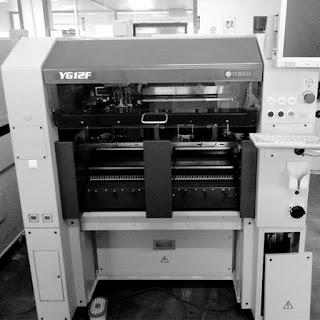
YS12 price of YAMAHA YAMAHA, Japan: USD50000-80000;
Japan heavy machine JUKI:2070 price: USD30000-50000; 2080 price: USD40000-90000;
The price of the mobile placement machine is also different according to their application, and the price difference is also compared
In addition, the automatic placement machine is the earliest to foreign automatic placement machine based. The price differentials of these brands are also relatively large. In recent years, the domestic placement machine development is relatively fast, the domestic automatic placement machine brand is also
More, the price difference is also relatively large. Automatic placement machine how much money? The following will be explained by the Beijing British science and technology mounter
The amount of automatic Mounter depends mainly on the following factors.

1, automatic placement machine, how much money to distinguish between domestic or imported mounter?.
Automatic placement machine prices on the whole, imports of automatic placement machine and domestic automatic placement machine has several times the gap, the low-end domestic automatic placement machine in general
About one hundred thousand, high-speed domestic automatic placement machine is generally less than six hundred thousand. Imported automatic placement machine is low-end automatic placement machine, also more automatic than domestic high-speed paste
The price of the film machine is much higher, if it is a high-speed machine, usually USD150000-USD250000.

2, the quality of the automatic placement machine also determines the price of the automatic placement machine:
The quality of the product is closely related to the price, whether it is an automatic placement machine or an automatic placement machine imported
Materials and accessories are made of high quality materials, in addition to quality assurance, then its price is naturally more expensive.


3, automatic placement machine operating mode is different, price differentiation is also relatively large:
Automatic placement machine operation mode can generally be divided into high-speed automatic placement machine, automatic placement machine at the middle speed, multi-function automatic placement machine (commonly known as pan machine) and so on,
According to the automatic placement machine operation mode, its price also has some differences. For example, high-speed SMT machines are generally more automatic than middle speed
The price of the film machine is a little higher.

4, the automatic placement machine is also determined by the number of automatic placement machine brand:
The import of those brands of automatic placement machine, each price is not the same, as well as domestic automatic placement machine brand different prices are not the same.


Frequently quality problems of SMT maching process.

Frequently quality problems of SMT maching process.

1, leading to leakage of patch main factors
1.1, SMT placement process, medium component feeding rack (feeder) feeding is not in place
1.2, SMT placement process, components suction nozzle gas road plug, suction nozzle damage, 
       suction nozzle height is not correct
1.3, the equipment vacuum, gas road failure, congestion
1.4, the circuit board purchase bad, produce deformation
1.5, there is no solder paste or solder paste on the circuit board
1.6, components quality problems, the thickness of the same species inconsistent
1.7, the patch machine calling program has errors or leaks, or programming, the choice of the 
      thickness parameters of components is wrong
1.8, because the operation is not standard, such as factors accidentally touch.

2, leading to the SMC resistor chip, flip side, side pieces of the main factors
2.1, components feeding rack (feeder) feeding abnormal
2.2 、 the height of the nozzle is not right
2.3 、 the height of the head is not right
2.4. The size of the loading hole of the component braid is too large, and the component is 
       turned over by vibration
2.5 the direction of the loose material into the braid is reversed

3, leading to the main component bias
3.1, patch machine programming, components of the X-Y axis coordinates is not correct
3.2, chip suction nozzle reason, so that the suction instability

4, leading to the main components of the patch damage
4.1, the positioning pin is too high, so that the position of the circuit board is too high,
 the components are pressed when mounted
4.2, patch machine programming, components of the Z axis coordinates is not correct
4.3. The suction head spring of the mounting head is jammed

How Many Feeder Slots Will You Need?


How Many Feeder Slots Will You Need?

Feeder slots can be one of the most confusing aspects of pick and place machines. A machine that has 64 
feeder slots won’t necessarily hold 64 feeders. Feeder slots are designed for 8-mm tape feeders. If you 
have larger tape feeders and/or sticks and waffle trays, each feeder will take up two or more feeder slots.

To determine whether a machine has enough capacity for your requirements, you will need to calculate 
just how many 8-mm feeder slots you’ll need.

Tape Feeders Slot Requirements
To calculate your feeder slot requirements, first list how many of each tape feeder size you will need. 
Then multiply each of those by the number of feeder slots the pick & place manufacturer says each will require.

Tape Feeder Example
For example, if you need 44 8-mm tape feeders and the manufacturer specifications say that each 8-mm 
tape feeder requires one feeder slot, you will need 44 feeder slots for your 8-mm tape feeders.
If you also need two 12-mm feeders, and the manufacturer’s specs say that 12-mm tape feeders require 
two slots each, you will need an additional four 8-mm tape slots (2 feeders x 2 slots/feeder) for your 
12-mm feeders, bringing your total slot requirement to 48.


Stick/Tube Feeder Slot Requirements
Generally, each manufacturer’s stick feeder will hold multiple sticks or tubes, so you’ll first figure 
out how many sticks or tubes of components you’ll have, then figure out how many stick feeders you’ll 
need in order to accommodate them, based on the number of lanes a stick feeder from that manufacturer 
holds. Finally, calculate out how many slots in the feeder base your stick feeder(s) will take up.

Stick Feeder Example
If you have 4 sticks and the available stick feeder holds 10 sticks, you would need one stick feeder. If 
the stick feeder requires 9 slots, your total slot requirement, building on the tape feeder example 
above, is now 57.

Matrix Trays and Cut Strip Tape Holders
Matrix tray holders and cut strip tape holders are sometimes mounted in feeder slots and sometimes 
placed in the board area. If the tray holder for the machine you’re looking at takes up feeder slots, 
you’ll need to find out how many and add that your requirement.
If, on the other hand, the matrix tray holder goes in the placement area, this will affect the size of 
the PCB/panel that the machine can handle, so be sure to keep that in mind. 

Sunday, December 3, 2017

What Will Your SMT Production Require?


What Will Your SMT Production Require?

The following steps will help you identify your minimum equipment requirements based on the job(s) you 
will be running.

1. What parts do you need?
For this step, you’ll need your bill of materials (BOM) for each product you’ll be assembling on the 
pick and place machine. Your BOM provides information critical to helping you calculate placement rate 
requirement, feeder type and number requirements, and the component placement capabilities your new 
machine will need to have.

Take a look at your BOM to find the following four items:
Total placements on the PCB. You’ll need this in step four.
Component package sizes. In step two, you’ll use this to information to identify the feeder sizes, 

types and slots you’ll require.
Total amount of unique components. Each component type will require its own feeder. The number of unique 
components will give you an idea of how many feeders your job will require—and will help you determine 

the feeder slots you’ll need available on a machine, in step two.
Largest component, smallest component and fine pitch requirement.
While you’re there, are there any special components your machine will need to have capabilities for? 

Odd form? BGA? CSP?
If you have more than one product to spec, you should create a spreadsheet for this step that tells you 
all of the above information for each product. Make a master list of component types that are used 
throughout all of your products so that you know the total amount of unique components for your 
workload.

2. What feeders will you need?
Using the component package sizes from the BOM, mark down how each package will be delivered: tape? 
stick or tube? waffle or matrix tray?

If components are delivered on tape, what is the tape width? Make a note of how many tape feeders 
you’ll need of each width.
How many stick/tubes will you have?
How many waffle/matrix trays?
You’ll use this information to determine how many feeder slots you’ll need available on your machine, 
based on how many feeder slots the manufacturer says each feeder type will use up.

3. How much board room do you need?
This one is easy. For each product, note the board or panel dimensions: length, width and thickness. You’ll 
need to know the minimum and maximum board area your job(s) requires.

4. What kind of speed do you need?
To determine your throughput requirement in components per hour (CPH), first figure out how many boards 
you will need to produce per hour while your line is running. Now check your BOM to see how many 
placements your boards will require. (If you will be doing multiple products, use the board that has the 
highest number of placements.) Multiple these two numbers together to get your minimum speed requirement 
(CPH). 

How Pick & Place Manufacturers Specify Equipment?

How Pick & Place Manufacturers Specify Equipment?

Understanding how equipment manufacturers specify their equipment is the first step in finding the right 
equipment for your production requirements.

Placement Speed
Placement speed for pick and place machines is measured in terms of "components per hour," or CPH 
(sometimes also referred to as PPH for "parts per hour"). This is the rate at which components are picked 
up, inspected and placed onto a PCB.

Many equipment manufactures use the IPC 9850 standard to determine CPH rates for their machines. This 
ensures that they are using the same part mix and PCB placement arrays, making it easier for buyers to 
compare one machine—and one manufacturer's machine—against another's. Other manufacturers will design 
their own PCB for their speed rating and use more accessible pickup locations to get a "faster" rating.
To determine a more "real world" production speed of a machine, de-rate the manufacturer's stated IPC 9850 
CPH rating by 20%. If the manufacturer's CPH is not IPC 9850, de-rate it by 30%.


Feeder Slots
Feeder capacity means the number of 8 mm tape feeders that can be loaded onto the machine at one time. 
Larger components will require larger feeders. You'll need to find out from the manufacturer how many slots 
each of the larger tape feeder types—12 mm, 16 mm, 24 mm and up—take up.
Matrix or waffle trays and tube (or stick) feeders will also take up valuable feeder slot real estate. If 
you'll need to use trays or tubes, you'll need to find out the capacity of the available feeders and how 
many 8 mm spaces they'll require.

Feeder slots can be one of the most confusing aspects of pick and place machine. A machine that has 64 
feeder slots won't necessarily hold 64 feeders. Feeder slots are designed for 8-mm tape feeders. If you 
have larger tape feeders and/or sticks and waffle trays, each feeder will take up two or more feeder slots.
To determine whether a machine has enough capacity for your requirements, you will need to calculate just 

how many 8-mm feeder slots you'll need.
To calculate your feeder slot requirements, first list how many of each tape feeder size you will need. 
Then multiply each of those by the number of feeder slots the pick & place manufacturer says each will 
require.

For example, if you need 44 8-mm tape feeders and the manufacturer specifications say that each 8-mm tape 
feeder requires one feeder slot, you will need 44 feeder slots for your 8-mm tape feeders. 
If you also need two 12-mm feeders, and the manufacturer's specs say that 12-mm tape feeders require two 

slots each, you will need an additional four 8-mm tape slots (2 feeders x 2 slots/feeder) for your 12-mm 
feeders, bringing your total slot requirement to 48.
Stick feeders and matrix tray holders are treated differently. Each of the manufacturer's stick feeders 
will hold multiple sticks or tubes, so first figure out how many sticks you have, then figure out how many 
stick feeders you'll need, and then find out how many slots that feeder(s) will take up.
For example, if you have 4 sticks and the available stick feeder holds 10 sticks, you would need one stick 
feeder. If the stick feeder requires 9 slots, your total slot requirement, building on the tape feeder 

example above, is now 57.
Matrix tray holders are sometimes mounted in feeder slots and sometimes placed in the board area. If the 
tray holder for the machine you're looking at takes up feeder slots, you'll need to find out how many and 
add that your requirement.

If, on the other hand, the matrix tray holder goes in the placement area, this will affect the size of the 
PCB/panel that the machine can handle. You'll take that into consideration in the next step.
Part Size
Equipment manufacturers will give you the maximum and minimum component dimensions that the machine will 

handle.
In many cases you'll see multiple component size specs given for a single machine. This happens when there 
are multiple alignment methods installed on the machine. One method may be faster or more precise, but 

because it only handles a narrow range of part sizes, an alternate alignment system is included to cover a 
wider component range. The machine's software will automatically switch methods as needed.
One thing you'll want to know is not just the largest size the machine can place, but what's the largest it 
can inspect? Some equipment has the ability to handle larger parts than they can inspect.
You'll also need to know the maximum part height the machine can handle.
On the small end of the spectrum, you'll want to know the minimum size the equipment can pick, index and 
place. Most machines are capable of handling 0402 or even 0201 chips. 01005 placement capability is out 
there, too. In any case, keep in mind that anything 0402 or smaller may require a special nozzle and/or 
feeder. Check with the manufacturer.

Component Lead Pitch
0.012" fine pitch is fairly standard for today's pick and place equipment. If fine pitch capability is 
required, do not be fooled by manufacturers referencing motor specification or motor accuracy. There is 
more to fine pitch placement than motor accuracy. It does not matter how accurate a motor is if the machine 
(system) cannot pick up, inspect, and place fine pitch leaded and ball grid components.

Other important considerations
Maximum and minimum PCB or panel size and thickness can be critical for some electronics manufacturers. 

Don't take the maximum values on their face: feeder racks and waffle trays can reduce available space.
You'll also want to make note of placement accuracy.
If you're not looking at benchtop machines, the PCB loading method could be important.
Fiducial recognition, coordinate correction and bad mark detection should be standard for automatic pick 

and place machines—check to make sure the equipment you're looking at has these features.
If you're looking at automatic machines, how are they programmed? CAD download, teaching camera, bar code 
readers, MIS and optimization functions and off-line programming can all make the operator's job easier and 

your production more efficient.
Some machines can be optionally fitted with a dispense head for depositing adhesive on the board. If you 
require this feature, note what the dispense method is, along with dot size and dispense speed.

How to select pick and place equipment?


For most purposes, selecting pick and place machine can be broken down into three simple steps:

Understanding how equipment is specified by manufacturers.
Calculating your product requirements:


Speed/capacity
Maximum and minimum component sizes
Precision and accuracy
Board or panel size
Number and types of component feeders
Benchmarking machines from various manufacturers against your requirements.
There are special considerations that differ based on the type of manufacturing you'll be doing. 
Are you an original equipment manufacturer (OEM)—in other words, are you manufacturing your own 
product?—or are you a contract or custom manufacturer, where you either manufacture someone's 
else's products or you custom manufacture your line of products based on your customer's needs. 
Perhaps you do a mix of both.

Contract assemblers and custom manufacturers need more flexibility in their placement 
capabilities and faster, easier job changeovers while OEMs doing some or all of their production 
in-house are looking for accuracy, speed and ease of use.
If this is your first pick and place machine, the availability of onsite installation, training 
and support from experienced, factory-trained technicians may be a big factor in determining 

which machine you purchase. Having someone help ensure you get your production off on the right 
foot can make all the difference for a young or growing company.
You may also have specific production needs—perhaps you're doing prototyping, or LED components 
are part of your assembly mix.

How to select pick and place equipment?

Much  more refer to Joy Technology Co.,Limited

SMT Splice Tape 8MM 12MM 16MM 24MM

SMT Splice Tape 8MM 12MM 16MM 24MM SMT Double Splice Tape 1) 500pcs/box, 8/12/16/24mm, yellow. 2) Guarantee perfect and reliable joints in a...